Linking anything to T.S. Eliot’s The Wasteland is bound to bring up a meaningful discussion, since
the very basis of Modernism is making the present include the past with the
same effort that people put into their worship of the texts of religion. Bringing up the subject of the hero is not
only a topic that garners appreciation, it is a bulls-eye for the modernist
reader.
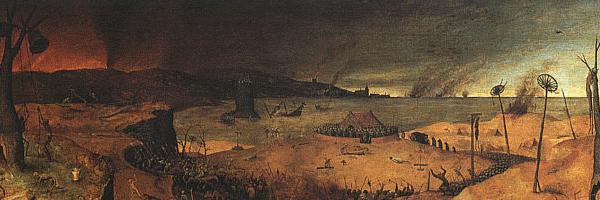
The title, “The Wasteland” is the first nod to the
past, by inciting Malory’s Morte
d’Arthur, the classic tales associated with the myths that have surrounded
the famous Knights of the Round Table.
This series of tales is so famous that many other authors have written
poetry about Morte d’Arthur, such as
Tennyson, who has been a huge influence on T.S. Eliot.
Linking the
tales from Morte d’Arthur with The Quest of the Holy Grail is by no
means a stretch.

When looking for the
connection of the hero and the quests they go on within The Wasteland one has to do some digging, as modernism
demands. While examining T.S. Eliot’s
poem, it is so immense in verbal scope that it is hard at times to really think
of it as a poem. Yet, one must adhere to the ‘rules’ of poetry in order to try
and tease out the deeper meaning that is in lurking in the shadows. One of these rules is to identify a speaker. Tiresias
identifies himself in line 218, within III.
Fire Sermon, “I Tiresias, though blind, throbbing between two lives,” (Eliot,
218). Now that Tiresias is known as the
speaker, how does one link him/her to being a hero, and also on a quest much
like the Knights of the Round Table?
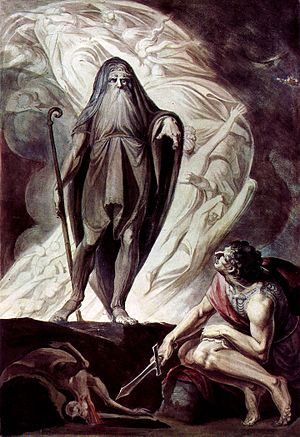
In line 218, Tiresias says he is
blind, since he is the blind man that can see everything, and throbs between
two lives. This line alone can bring up
many dualistic and binary relationships, such as past and present, which is the
focus of modernism; good and evil, which is a classic religious motif; or man
and woman which is brought up throughout time in myths such as Ovid’s Metamorphoses. Tiresias then clears up this question with
line 219, “Old man with wrinkled female breasts” (Eliot, 219). This just means that the scope of
Tiresias’ telling of this story brings everyone into its scope.
The hero of The Quest of the Holy Grail is Galahad, which is a departure from
the usual heroes which
 |
| ~Statue of Galahad in Ottawa, Ontario~ |
were Lancelot and Gawain. This is because Galahad was
essentially Jesus, and could not have his life marred with the victories and
human fallibilities of his father, Lancelot, and Gawain, sadly was also too
human. Galahad in his pureness went on a
quest to find the holy grail, but since the title of the text was Quest of
the Holy Grail, this entails that finding the grail was not the
terminus of the quest, it was becoming a pure enough soul with the ability to
hold the symbol of God up. The Grail was
a vessel, just like the body is a vessel, so, in order to hold the vessel of
God’s grace, then one must become a vessel for God’s grace. So the quest, in
and of itself was a quest for purity, and to become a symbol for others to look
up and likewise become more apt to live a purer life. Galahad is also somewhat divorced from his
father, becoming an example of knighthood, God’s symbolic and all too real
warrior of the medieval ages that Lancelot could never approach. This switch is shown by the recognition of
Lancelot’s place as this example by Guinevere, the authority on these things in
Arthurian legends, when she says, “’In God’s name,’ she said, ‘if you will not
name him, I will. He who begot you is
known as Sir Lancelot of the Lake, the fairest and best and more gracious of
knights,” (Quest, 48) and then later when a ninja-like monk enters the path of
Lancelot, and Lancelot identifies himself, the monk replies, “’Lancelot,’ said
the other, ‘in God’s name you are the last man I was bent on meeting: for there
is no sorrier knight than you.” (Quest, 135).
This establishes that Lancelot is not the hero. The text establishes it
is because of his sins. Galahad has no
such sins since he does not have much of a life, or nor history. How does one
really be that pure? It is impossible,
and the text pretty much supports that this is impossible. Galahad is the impossible form of humanity,
yet by having the other knights try and follow him this becomes an example to
the readers that they too are less perfect than even the knights, or at least
have something in common with them, making the quest for a purer soul not so
out of reach.
The very steps of this quest is full
of conflicts. These conflicts look like
they are outward in nature, yet they are always internal, since each action is
being weighed not only by themselves, but by God. These series of quests and
stories illustrates how everyone can
be a hero in God’s eyes, and empowers the readers through these lessons. Each story in The Quest of the Holy Grail takes on a particular set of human
traits and talks about them. Thankfully
there are monks, which represent the priest’s place in the world as the
interpreters of the Bible and the other religious texts and ideas. These monks
make things much clearer, and help develop understanding of each knight’s
failings and successes in their quests.
Tiresias is also preaching purity
and cleansing. Throughout the poem,
there are seemingly different narrators.
This confuses the readers, but when Tiresias reveals himself (or
herself?), he shows that he/she is both the female and male thus is the narrator no matter what gender is
evidenced.

Throughout The Wasteland, strong imagery is employed to give a dark picture of
what the society is like in post-industrial England. It starts with, “I. The Burial of the Dead” which seems to be talking about
memories. The darkness of the scene is brought to fore by the description of
the weather, then the use of the Tarot cards adds mystery along with a
foreboding feel by using the “Hanged Man” card.
The scene painted in the first portion of the poem is dire, and is
perfect for a feeling that something needs to be changed to be seeded in the
mind of the reader.
The second scene, “II. A Game of Chess”, three women are conversing. This story tells of the wasteful nature of sex and sexuality in the current era further deepening the pall of depression that has gripped England. The woman who has taken the drugs for an abortion has no teeth, and is being harassed about this, “Now Albert's coming back, make yourself a bit smart./

He'll want to know what you
done with that money he gave you/
To get herself some
teeth. He did, I was there.” (Eliot,
143-145). This both shows how women were trying to express their sexuality, but
was still under the oppression of male dominance. This dominance was not only the male’s doing,
but was self-defeating by the women too, in their unhealthy and un-reproductive
forms of sexuality.
The third scene, “III.
The Fire Sermon” is where Tiresias shows itself. He is not exactly a hero, but he starts to
show that there is a hero. Through the
love affairs that actually had no love associated with them, a warning of
acting out of lust rather and love is provided.
In the shortest fourth scene, “IV.
Death by Water”, Phlebas is drowned in the symbol of live and picked clean
by its inhabitants. Warning that even those with perfect physical form cannot
outlive the karma they have built up. These two acts, like in The Quest of the Holy Grail, show
skin-deep sentiments will not get one far.
 The last scene, “V. What The Thunder Said”, then lets us see who the real heroes are:
the readers.
     The last scene, “V. What The Thunder Said”, then lets us see who the real heroes are:

the readers.

“After the frosty silence in the gardens / After the agony in stony places” (Eliot 323-324), is a line that represents the image of what silent people are like and what happens to them. Eliot then shows the readers that they have something that God has given them which is their voice. Through the illustrations of sound via the water, cicada and hermit-thrush, (hermit being a great choice of words, since they were the bringers of understanding in The Quest for the Holy Grail), Eliot shows how God gave us, the readers, voice, and we should use it. He goes on to show how that everyone actually knows was is wrong but can’t seem to speak up, which is represented by this:
“We think of the key, each in his prison / thinking of the key, each confirms a prison.”
(Eliot, 412-413).
The Wasteland is a quest to understand that the people can speak up, but must be educated in order to do so. Instead of a pure soul, Eliot is looking for a better society, and the heroes are the people of society where their voices are their swords.

No comments:
Post a Comment